For over half a century, the cinematic landscape of the American West was dominated by a singular, towering figure whose very silhouette became synonymous with the nation’s frontier mythology. John Wayne, born Marion Robert Morrison in the modest environs of Winterset, Iowa, transcended the boundaries of mere Hollywood stardom to become an indelible emblem of American masculinity, resilience, and unyielding moral fortitude.1 To the global public, he was “The Duke,” an invincible cowboy, a decorated soldier, and a stoic patriarch who could conquer any adversary with a mere narrowing of his eyes and the slow, rhythmic cadence of his drawl. Yet, behind the celluloid projection of infallibility existed a profoundly complex, vulnerable mortal man. On the afternoon of June 11, 1979, the 72-year-old icon lay in Room 314 of the UCLA Medical Center in Los Angeles, ultimately confronting an adversary he could not outdraw.1 Stripped of his cowboy boots, his ten-gallon hats, and the protective armor of his legendary persona, John Wayne faced the final frontier of human existence.
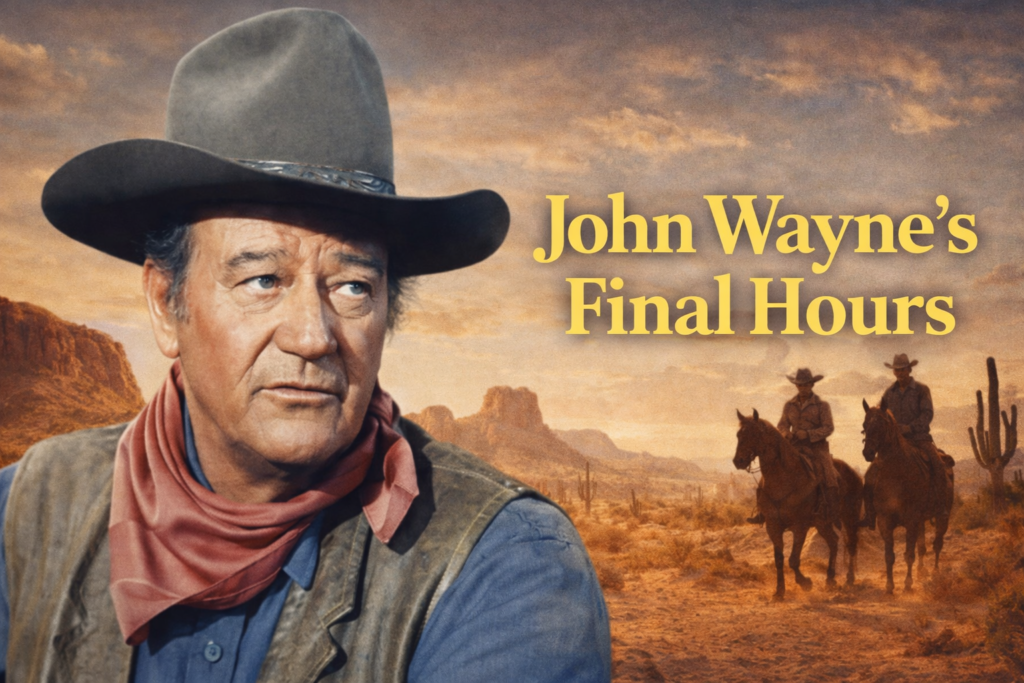
The story of John Wayne’s final hours is not a narrative of defeat, nor is it a simple chronological recounting of a celebrity passing. It is, rather, a deeply emotional, highly instructive exploration of a titan coming to terms with his own mortality. In his last days, Wayne engaged in a series of profound personal reckonings, mending strained family ties, formalizing a long-delayed spiritual commitment, and architecting a philanthropic legacy that would save countless lives in the decades to come. By examining the intimate details of his declining health, his final poignant public appearances, the emotional weight of his last conversations, and the enduring cultural impact of his legacy, a highly nuanced portrait emerges. It is the story of a man who spent a lifetime building a myth, only to spend his final hours dismantling it to reveal the father, the husband, and the profoundly human soul underneath.
The Final Chapter of a Legend
The twilight of John Wayne’s life was characterized by a stark, often agonizing contrast between the enduring strength of his public image and the rapid, devastating deterioration of his physical body. The final chapter of his legend did not unfold as a sudden catastrophe, but rather as a prolonged, courageous, and deeply taxing war of attrition against severe illness. To fully comprehend the emotional gravity of his final days, it is essential to trace the extensive medical battles that defined his later years and the remarkable ways in which he integrated his encroaching mortality into his final artistic and public endeavors.
Wayne’s confrontation with severe health crises began long before the summer of 1979. A relentless smoker who reportedly consumed up to five packs of cigarettes a day for decades, Wayne faced his first major brush with mortality in 1964 when he was diagnosed with lung cancer.4 The treatment required the surgical removal of his entire left lung and several ribs—a massive physical trauma that would have permanently sidelined a lesser individual.4 Yet, driven by an iron will and a refusal to let the public perceive him as an invalid, he returned to the screen, adapting his physical performance to accommodate his diminished lung capacity.
However, the ensuing decade brought a relentless cascade of new medical challenges. In April 1978, his health deteriorated further, necessitating open-heart surgery to replace a defective mitral valve.1 Shortly thereafter, his compromised system was struck by a severe bout of hepatitis.6 By the time he appeared for what would be his final television interview with Barbara Walters in January 1979, Wayne was a man visibly worn down by his physical trials.6 He had agreed to the interview just before entering the UCLA Medical Center for what was anticipated to be a routine, two-hour surgery to remove painful gallstones.6 Tragically, during that operation, surgeons encountered severe complications; the procedure extended into an all-day ordeal as doctors discovered that cancer had returned, this time aggressively metastasizing in his stomach and intestines.6
The Cinematic Elegy: The Shootist
As his health declined, Wayne made a highly deliberate and profoundly resonant choice for what would become his 179th and final feature film.1 Directed by Don Siegel and released in 1976, The Shootist stands as one of the most remarkable meta-cinematic swan songs in the history of Hollywood.9 Based on the 1975 novel by Glendon Swarthout, the film stars Wayne as John Bernard “J.B.” Books, an aging, legendary gunfighter whose era is rapidly coming to a close.10
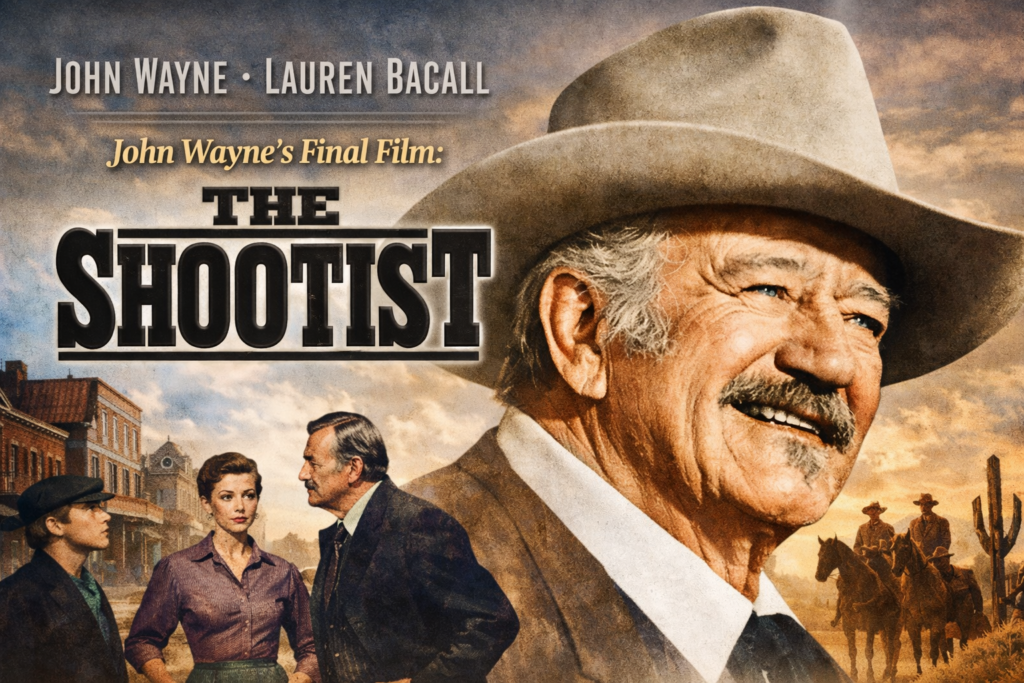
The narrative parallels between J.B. Books and John Wayne were impossible to ignore, transforming the film into a living, breathing eulogy. Books arrives in Carson City, Nevada, on January 22, 1901, the exact date of Queen Victoria’s death, symbolizing the end of an era, only to be diagnosed with terminal cancer by his old friend, Dr. Hostetler, played by Wayne’s longtime Hollywood contemporary James Stewart.9
| Narrative and Thematic Elements | J.B. Books in The Shootist (1976) | John Wayne in Reality (1976-1979) |
| Status and Archetype | A legendary figure from the bygone era of the Wild West, struggling to fit into a modernizing world.9 | A legendary Hollywood icon representing the Golden Age of cinema, navigating a shifting 1970s Hollywood landscape.12 |
| The Medical Crisis | Diagnosed with terminal cancer by Dr. Hostetler, facing an agonizing and inevitable physical decline.9 | A cancer survivor who would soon face a terminal stomach cancer diagnosis, battling severe chronic pain.4 |
| The Inescapable Public | Hounded by journalists, opportunists, and rivals seeking to profit from his fame and imminent death.9 | Surrounded by intense media scrutiny, public fascination, and the receipt of over 300,000 pieces of fan mail in the hospital.6 |
| The Final Objective | To orchestrate his own end with dignity, settling scores and dictating the terms of his demise.11 | To secure his family’s financial future, solidify his philanthropic legacy, and formalize his spiritual state before passing.14 |
The film begins with a brilliant montage utilizing actual archival footage from Wayne’s earlier Westerns to establish Books’ violent, mythic backstory, effectively summarizing Wayne’s own fifty-year career on screen.1 Throughout the film, Books articulates a personal credo that mirrored Wayne’s own staunchly individualistic, conservative worldview: “I won’t be wronged; I won’t be insulted; I won’t be laid a-hand on. I don’t do these things to other people, and I require the same from them”.9
Surrounded by a stellar supporting cast that included Lauren Bacall, Ron Howard, and Richard Boone, Wayne delivered a performance that stripped away the invincible superhero veneer to reveal the fear, the pain, and the quiet dignity of a man facing his own end.10 The moment in the film where Books admits his fear of mortality to Bacall’s character remains especially poignant, as the audience was fully aware that Wayne was not entirely acting.17 The Shootist earned widespread critical acclaim and remains a masterclass in how an actor can channel their own physical decline into a transcendent piece of art.9
The Final Public Appearance: The 1979 Academy Awards
Wayne’s gradual withdrawal from the public eye culminated in a final, unforgettable, and highly emotional appearance at the 51st Academy Awards on April 9, 1979.7 The circumstances surrounding this appearance were fraught with tension. Wayne was gravely ill, having recently undergone his devastating stomach surgery, and his physical deterioration was starkly evident to anyone who saw him.18 His frame, once barrel-chested and imposing, had thinned dramatically.19 Yet, displaying the immense willpower and professional duty that had defined his entire life, Wayne donned a tuxedo and stepped out onto the stage at the Dorothy Chandler Pavilion to present the evening’s final award for Best Picture.
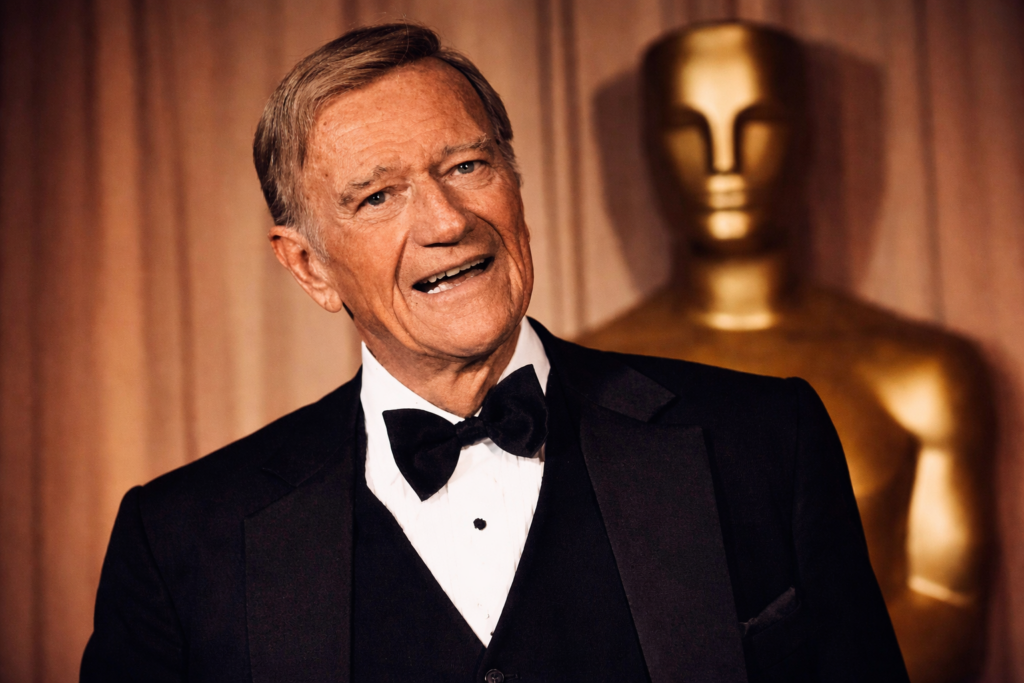
When Wayne emerged, the audience, comprising the elite of an industry that was rapidly shifting away from his traditionalist style toward the gritty, morally ambiguous realism of the New Hollywood, rose to its feet in a massive, thunderous, and prolonged standing ovation.18 It was a moment of profound collective emotion; it was not merely applause for an actor, but a unified gesture of respect for a dying titan and a melancholic acknowledgment of the end of an era.20
Wayne, visibly moved by the reception, addressed the crowd with his characteristic humility and a touch of self-deprecating humor. Waiting for the applause to subside, he noted that “that’s just about the only medicine a fellow would ever really need”.19 Putting his career into perspective, he pointed out that both he and the Oscars had arrived in Hollywood in the same year, 1928, joking, “we’re both a little weather-beaten, but we’re still here and plan to be around for a whole lot longer”.19
However, beneath the humor lay a profound and somewhat tragic historical irony. Wayne, who had been one of the most passionate defenders of American military intervention and had directed and starred in the overtly pro-Vietnam War film The Green Berets in 1968, was tasked that night with handing the Best Picture Oscar to Michael Cimino for The Deer Hunter.19 The Deer Hunter was a harrowing, emotionally devastating film that pulled no punches in showing the severe psychological wreckage left by that very war, prompting protests outside the venue that very night.18 This passing of the torch underscored that Hollywood and the American cultural consciousness had definitively moved on from the mythic, black-and-white morality of Wayne’s era.19 Yet, the quiet dignity with which Wayne handled the moment sealed his legacy; he stood before his peers, stripped of the illusion of immortality, and faced his decline with unshakable courage.20 Just two months later, he would be dead.7
His Final Day and Last Words
By early June 1979, the battle was nearing its inevitable conclusion. John Wayne was confined to Room 314 at the UCLA Medical Center.3 The cancer had aggressively advanced beyond the reach of any further medical or surgical intervention, and his team of doctors estimated he had only hours, perhaps a single day, left to live.3
The atmosphere surrounding the hospital was a potent, surreal mix of intense private grief and overwhelming, almost suffocating public affection. While his family gathered quietly around his bedside, forming a protective perimeter around the patriarch, the outside world clamored for news of The Duke. The hospital switchboard was constantly deluged with inquiries from international press and devastated fans.6 In a testament to his monumental global impact, an astonishing 300,000 pieces of fan mail flooded into the medical center during his stay.13 Wayne, slipping in and out of consciousness under the heavy burden of pain medication, would never get the chance to open or read these testaments to his life’s work.13
In these final, fading hours, the rough, impenetrable exterior that John Wayne had cultivated over a lifetime completely dissolved, giving way to a deeply touching, raw vulnerability. He was surrounded by the people who mattered most: his seven children from his previous marriages (Michael, Toni, Patrick, Melinda, Aissa, Ethan, and Marisa), and his third wife, Pilar Pallete.1 For a man who had often prioritized the grueling schedule of months-long location shoots and the immense demands of global stardom over the daily, mundane routines of family life, this final gathering served as an opportunity for profound emotional reckoning and healing.
The Weight of a Father’s Apology
One of the most revealing, heart-wrenching, and historically significant episodes of his final days occurred in the quiet space between Wayne and his son, Patrick. For years, their relationship had been strained by the emotional distance that so often accompanies massive celebrity, as well as the unique pressures of being the son of an American icon.3 In 2001, twenty-two years after his father’s death, Patrick Wayne finally felt ready to reveal the details of a highly private conversation that took place in Room 314 the night before John Wayne passed away.3
Patrick had been sitting quietly in the room, assuming his father was asleep or unconscious. He was preparing to leave when Wayne weakly called out to him: “Patrick. Come here, son”.3 In the ensuing twenty minutes, the legendary actor systematically dismantled his own carefully constructed myth. He offered a profound, devastating apology to his son for his absences over the decades.3 He expressed deep regret for choosing the machinery of movie-making over the milestones of his children’s lives, and for missing the simple, foundational moments of family connection that money and fame could never replace.3
It was a confession of severe paternal regret that stood in stark contrast to the infallible, always-certain heroes he played on screen. Then, after laying bare his failures, Wayne delivered the words that Patrick had waited forty years to hear: “I’m proud of you”.3
This conversation fundamentally altered the trajectory of Patrick’s life. It taught him that the ultimate legacy of a man is not found in fame, wealth, box office receipts, or Academy Awards, but in the simple act of presence.3 As Patrick later noted, his father’s late realization allowed him to forgive the past, and it instilled in him a fierce determination to be present for his own children.3 This demonstrates that even with his final breaths, John Wayne was actively imparting vital, life-altering lessons. The sheer humanity of this moment—a dying man seeking redemption, stripping away his pride, and offering desperate validation to his son—reveals a universally recognizable human struggle that resonates far beyond the boundaries of Hollywood history.
The Tender Final Declaration
As the hours dwindled and his strength evaporated, Wayne’s interactions became fewer but infinitely more concentrated in their emotional weight. Throughout his cinematic career, Wayne’s onscreen dialogue was famously terse, stoic, and commanding—delivered with that distinct, rhythmic cadence that countless imitators would echo for decades.23 He was the man who spoke softly but carried a big stick, rarely expressing overt sentimentality.
However, his actual final words in the mortal realm were characterized by a tragic, unguarded, and overwhelming tenderness.23 When his wife, Pilar, and his daughter, Aissa, were standing closely by his bedside in his final conscious moments, they gently asked if he knew who they were.23 The question was a poignant check on his fading lucidity amidst the haze of heavy medication and the agonizing toll of his stomach cancer.
Wayne, mustering the very last reserves of his physical strength, offered a final declaration of love. He reportedly looked at them and replied, “Of course I know who you are. You’re my girl. I love you”.23
These words, entirely devoid of any cinematic grandstanding or mythic posturing, remain incredibly moving to this day. They demonstrate that at the very end of his long, turbulent trail, the man who had personified the rugged, emotionally stoic American ideal sought comfort in the most fundamental and fragile of human emotions. The fact that his last utterance was a gentle, protective affirmation of love continues to bring tears to the eyes of fans and historians alike.23 It provides a beautiful, softly lit conclusion to a life lived under the harsh, unforgiving glare of the international spotlight. Shortly after 5:00 PM on June 11, 1979, surrounded by his bloodline, Marion Robert Morrison slipped away into history.1
The Final Things He Did Before Passing
The final days of John Wayne’s life were not merely spent in passive resignation waiting for the end. True to the proactive, commanding nature of his personality, his final hours were characterized by a flurry of decisive actions aimed at securing his family’s highly complex future, establishing an enduring legacy of medical philanthropy, and, most surprisingly to the general public, reconciling his deeply personal spiritual beliefs. Facing the absolute certainty of his demise, Wayne took deliberate, calculated steps to order his earthly and spiritual affairs.
Estate Planning and Settling Scores from the Grave
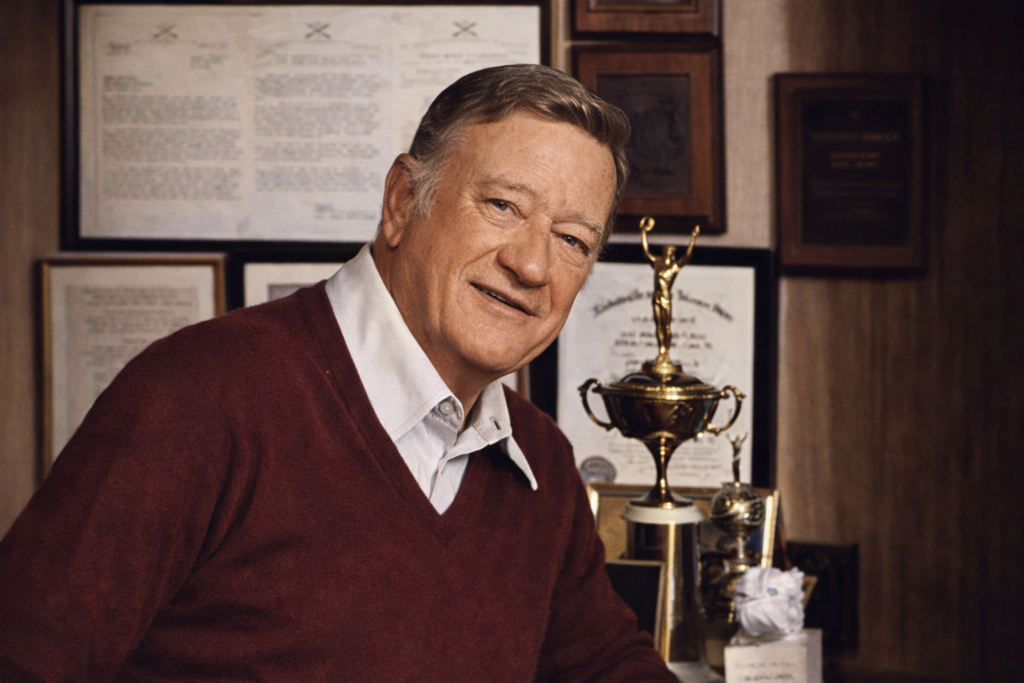
When Wayne died, his estate was valued at approximately $6.85 million—a very substantial fortune in 1979.14 However, the distribution of his wealth was highly unconventional and deeply telling of his mindset, his judgments, and his desire to maintain patriarchal control even after his passing. Rather than taking the standard route of splitting his assets evenly among his seven children, Wayne designed a highly specific, bespoke formula based strictly on age: the older the child, the larger the inheritance.14 This meant that his youngest son, Ethan, who was still a teenager at the time of Wayne’s death, received a mere fraction of what his older, adult siblings inherited.14
Furthermore, Wayne used his will as a mechanism to exercise a firm hand over his family dynamics, effectively settling scores and enforcing his will from beyond the grave.14
| Estate Planning Action | Underlying Implication and Control Mechanism |
| Age-Based Distribution Formula | Rewarded older children while severely limiting the immediate wealth of his youngest son, Ethan, perhaps to instill a need for independent work ethic.14 |
| Consolidated Business Control | Placed the absolute control of the entire Wayne family business and brand in the hands of one specific child, preventing corporate fracturing.14 |
| Spousal Blocking | Specifically structured the inheritance of one daughter with stringent legal barriers to ensure her husband could never access or touch her share of the wealth.14 |
These were not merely the detached, algorithmic calculations of financial planners or lawyers; they were the actions of a fiercely protective patriarch making acute, highly personal, and somewhat ruthless judgments about his family’s capabilities, vulnerabilities, and the external threats to their stability. It demonstrated that even as his physical strength waned to nothing, his desire to protect his bloodline and direct his family’s future remained as fierce and unyielding as any character he ever played.14
The Genesis of the John Wayne Cancer Foundation
Beyond the immediate concerns of his family, Wayne was acutely, almost painfully aware of his immense debt to the American public. Lying in his hospital room, he engaged his eldest son, Michael, in a pivotal conversation about his overarching philanthropic legacy. Wayne understood the unparalleled power, reach, and trust associated with his name, and he explicitly instructed Michael to ensure it was used to benefit the public that had steadfastly supported him for half a century.25 Wayne humbly stated, “If it weren’t for the public, I wouldn’t be here… We wouldn’t have had the life we had”.25
Having waged war against cancer twice over a grueling fifteen-year span, Wayne became deeply passionate about helping others fight the terrible disease that was ultimately claiming his life.4 He specifically asked that his name, his likeness, and his resources be leveraged to fund novel cancer research and support patients who were enduring the same agony.15
Honoring this solemn deathbed wish, his children officially established the John Wayne Cancer Foundation (JWCF) in 1985.4 Founded on the core values that Wayne himself championed—”courage, strength, and grit”—the foundation has since become a major, highly respected force in the field of oncology.4 By directing the creation of this foundation in his final days, Wayne ensured that his legacy would profoundly transition from cinematic entertainment to lifesaving medical advancement, cementing his status not just as an actor, but as a benefactor to human health.
The “Cardiac Catholic”: A Deathbed Conversion
Perhaps the most fascinating, intensely debated, and spiritually profound action of John Wayne’s final days was his deathbed conversion to Catholicism. Born into a traditional Presbyterian family in Iowa, Wayne had spent the vast majority of his life surrounded by intense Catholic influences without ever officially taking the sacraments himself.21
His personal life was deeply intertwined with the Church. All three of his wives, Josephine Alicia Saenz, Esperanza Baur, and Pilar Pallete, were devout Catholics of Hispanic descent, and he had willingly agreed to raise all seven of his children, and subsequently his twenty-one grandchildren, in the Catholic faith.16 He was deeply integrated into Catholic cultural circles in Hollywood, regularly attending Catholic school events, hosting dinners with priests and nuns, and observing the rituals of his family.21 Furthermore, his closest friend, mentor, and most frequent collaborator, the legendary director John Ford (born John Martin Feeney), was a fiercely proud Irish Catholic.16 When Ford died of a painful cancer, Wayne was profoundly moved by the immense psychological comfort and spiritual peace that Ford’s Catholic faith provided him during his agonizing final months.16
Over the years, when probing reporters asked Wayne about his own religion, he would often defuse the tension by jokingly replying that he was a “cardiac Catholic” a term implying that he fully intended to convert, but only at the very end, when his heart was failing and time was running out.26 In the final days at UCLA Medical Center, that long-standing joke transformed into a solemn reality.
Influenced by a private Catholic nurse who had deeply impacted him while caring for him previously at Massachusetts General Hospital, and prompted by the persistent, decades-long prayers of his family (particularly his first wife, Josephine, who had prayed for his conversion since their divorce in 1945), Wayne decided to formalize his faith.16 At his explicit request, his son Patrick summoned Father John Curtis, C.P., the Catholic chaplain of the hospital.16 Just one or two days before he died, John Wayne was officially baptized and formally received into the Catholic Church.16
This deathbed conversion places Wayne in a long historical tradition of end-of-life spiritual awakenings, echoing historical figures like Emperor Constantine and St. Dismas (the Good Thief) who waited until their final moments to receive the sacraments.28 For Wayne, it was the final, critical act of a man seeking ultimate peace, making spiritual amends for his past infidelities, divorces, and personal failings, and aligning his eternal state with the family he loved so deeply.26
The Man Behind The Legend
To fully appreciate the gravity and the emotional resonance of John Wayne’s final hours, one must meticulously deconstruct the myth and distinguish between the towering cinematic icon and the man known to his family simply as “Dad.” The public saw the quintessential American hero, a man of unyielding morality, quick with a six-shooter, and unflinchingly staunch in his conservative political beliefs.12 However, those who lived behind the walls of his home remember a man who was far more complex, unexpectedly humble, and deeply invested in instilling foundational moral values in his offspring.
Fatherhood, Discipline, and the Supremacy of Truth
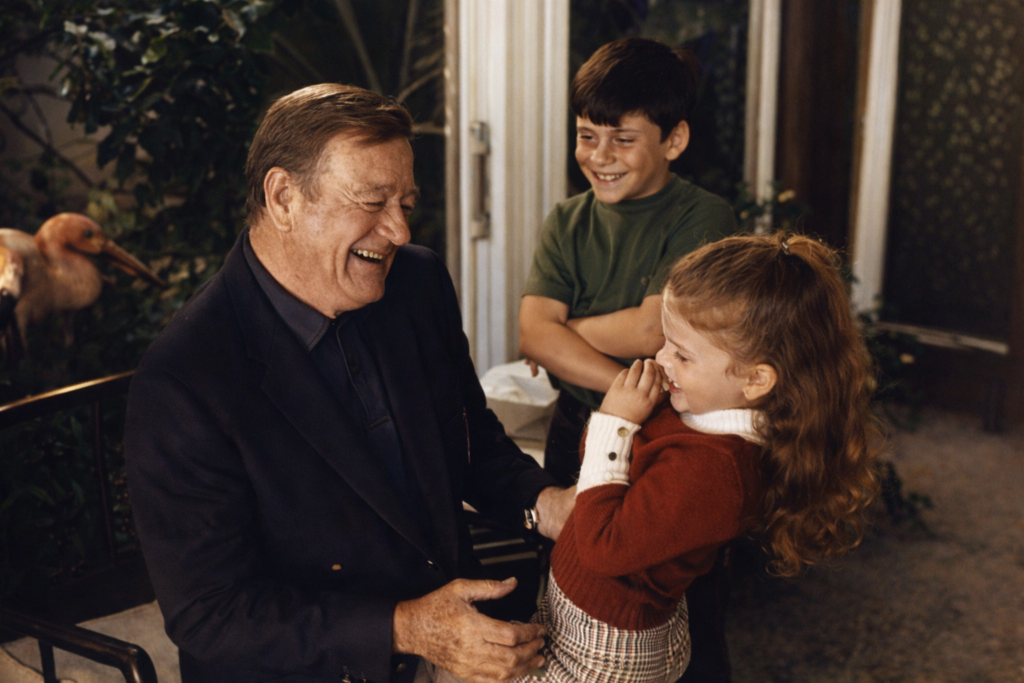
Despite the massive, almost suffocating shadow cast by his global fame, a phenomenon his youngest son Ethan later referred to as the “big John Wayne banner” that followed them everywhere they went, Wayne strived tirelessly to provide a grounded, disciplined upbringing for his children.25 He fundamentally refused to view his celebrity as a free pass for his family to live a life of unchecked privilege; rather, he viewed his fame strictly as a pragmatic, necessary tool to get his movies financed, produced, and distributed.25 His daughter Melinda fondly recalled that despite his larger-than-life, wealthy image, he was “actually very humble” and possessed a relentless, working-class work ethic.25
Wayne expected his children to share this rigorous work ethic. He assigned them regular, menial chores, monitored their academic progress closely, and demanded that they call him every single night when he was thousands of miles away on location shoots in places like Mexico.25 He viewed it as his primary, non-negotiable parental duty to ensure they grew up to be responsible, contributing “good citizens”.25
Nowhere was his intense parenting style more evident than in his strict, almost absolute adherence to honesty. His daughter Aissa recounted a highly revealing childhood incident: as a rough-and-tumble tomboy, she intentionally stepped on another little girl’s head during a playground scuffle.25 The girl immediately ran crying to Wayne, who was inside with other adults. When Wayne confronted Aissa, he used his imposing 6’4″ physical presence and booming theatrical voice to demand the truth, but quickly softened his approach to offer a pivotal, unforgettable life lesson.
He offered her a stark ultimatum: if she lied about what she did, he would be profoundly disappointed in her character, and she would be punished. If, however, she told the truth, she would still face punishment for her physical actions, but he would not be disappointed in her as a person.25 Aissa, understanding the weight of the choice, chose the truth. Wayne administered the punishment fairly, but true to his word, he never brought the incident up again once the debt was paid.25 This anecdote perfectly encapsulates the real John Wayne: a man who valued integrity, accountability, and straight-shooting above all else, enforcing strict discipline but rewarding honesty with unwavering fairness and respect.
The Contrast Between Public Politics and Private Grace
In the broader public sphere, particularly in the latter half of his career, Wayne was a lightning rod for intense political controversy. A staunch anti-communist and a fierce, unapologetic defender of American military interventions, he often clashed loudly with the countercultural movements, anti-war protests, and shifting social norms of the 1960s and 1970s.12 His infamous 1971 interview with Playboy magazine contained blunt remarks on race, Native Americans, and social issues that were deeply controversial even then, and remain heavily scrutinized and criticized today.12
Yet, those who worked closely with him on sets, and those who lived with him, described a man who rarely allowed his rigid political dogma to dictate his personal relationships or his daily behavior. He was universally known in the industry as a straight-shooter who adamantly refused to hold a colleague’s creed, skin color, political affiliation, or sexuality against them while making a picture.12
His grandchildren and children have spent decades defending the totality of his legacy, emphasizing that his public comments were often the blunt, unpolished instruments wielded by a man from a vastly different era, whereas his private, everyday actions were characterized by immense generosity, personal warmth, and a genuine, egalitarian respect for individuals from all walks of life.15 His granddaughters, Marisa and Anita, note that “every opportunity he had, he made somebody feel special,” exhibiting a personal touch that transcended generational, political, and social divides.13 He was famous for never being without signed cards in his pocket, ensuring he could stop and acknowledge every single working-class fan who approached him.15
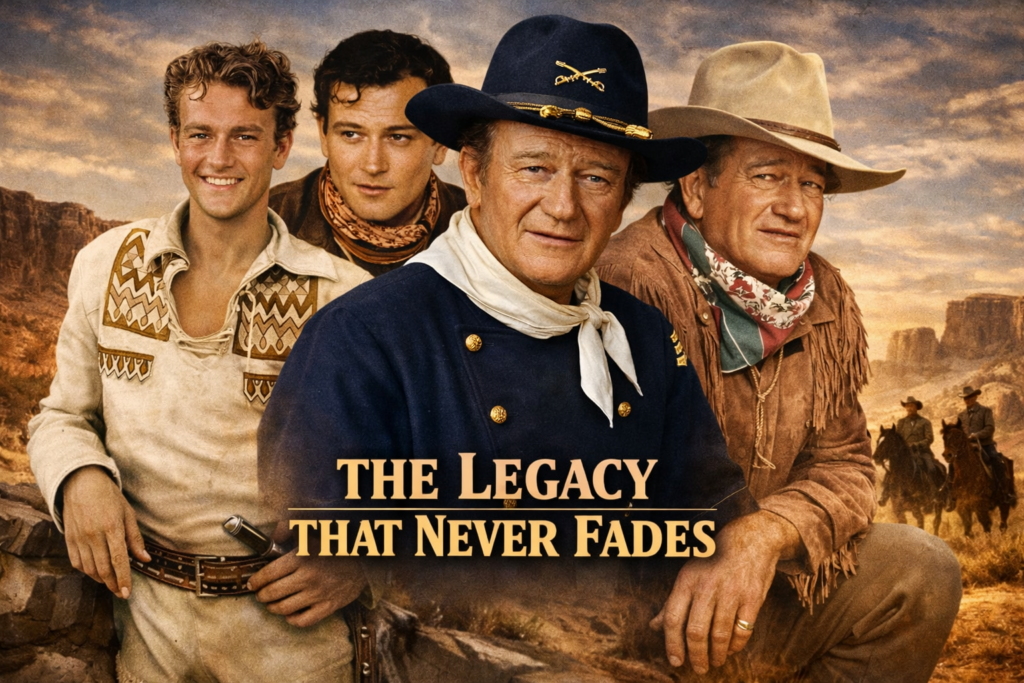
The Legacy That Never Fades
When John Wayne passed away on that June evening in 1979, the United States lost vastly more than a successful actor; it lost a foundational, mythic pillar of its 20th-century cultural identity. The legacy he left behind is a vast, multifaceted tapestry that encompasses unparalleled cinematic history, deeply ingrained cultural mythology, and enduring, life-saving philanthropy.
A Cinematic Titan and the Archetype of the Hero
John Wayne’s filmography is a staggering, monolithic monument to Hollywood’s Golden Age. Starring in over 170 films across a career that spanned a full fifty years, he was a dominant, bankable box-office draw for three uninterrupted decades—a feat of longevity rarely matched in the history of the medium.2 His historic collaboration with director John Ford fundamentally elevated the Western genre from disposable, low-budget B-movies to profound, sweeping cinematic explorations of American history, morality, and character.
| Landmark Cinematic Achievement | Year | Cultural and Cinematic Impact |
| Stagecoach | 1939 | Propelled Wayne from B-movie obscurity to mainstream stardom as the Ringo Kid, fundamentally redefining the Western genre for a global audience.1 |
| The Searchers | 1956 | Universally cited by directors and critics as one of the greatest films ever made; Wayne delivered a dark, morally complex performance as an obsessive anti-hero.8 |
| True Grit | 1969 | Won Wayne his first and only Academy Award for Best Actor for his highly self-aware, comedic, yet gritty portrayal of the cantankerous, one-eyed Marshal Rooster Cogburn.5 |
| The Shootist | 1976 | His poignant, masterfully self-reflexive final role as a dying gunfighter, directly mirroring his own real-life battle with terminal cancer.1 |
His influence on the craft of acting, and specifically on the archetype of the American hero, is absolutely immeasurable. While modern acting techniques lean heavily on the internal, emotional realism pioneered by Marlon Brando and the Method school, Wayne’s highly externalized style—rooted in immense physical presence, terse, unwavering authority, and absolute moral conviction—remains the foundational gold standard for action stars and cinematic heroes to this day.12 Recognizing this unparalleled impact, the American Film Institute in 1999 rightfully recognized him as one of the greatest male stars of classic American cinema.8
The Ultimate Patriot and Institutional Legacy
Beyond the boundaries of the silver screen, Wayne was viewed by millions as the living embodiment of the nation’s frontier heritage and its highest ideals of liberty, individualism, and strength.2 He tirelessly and vigorously supported the U.S. armed forces, making numerous, dangerous trips overseas to entertain and boost the morale of troops during both World War II and the deeply unpopular Vietnam War.33
In recognition of his massive cultural impact, his unwavering patriotism, and his lifelong commitment to the republic, he was posthumously awarded the Presidential Medal of Freedom in 1980, the absolute highest civilian honor bestowed by the United States government.7 Today, his institutional legacy is visible across the country, from the millions of travelers who pass through the John Wayne Airport in Orange County, to the visitors of the permanent “John Wayne: An American Experience” exhibit in the historic Fort Worth Stockyards in Texas.13
The Gravesite and the Tomorrow Inscription
Wayne’s physical resting place is as profoundly telling as the life he lived. He was buried at Pacific View Memorial Park in Corona del Mar, Newport Beach, California, a fittingly beautiful, highly conservative location perched atop a hill overlooking the blue waters of the Pacific Ocean, near where he spent his final, peaceful years sailing his beloved yacht, the Wild Goose.5
Remarkably, for twenty full years following his death, the grave of one of the most famous men in the world remained completely unmarked.35 His family made this difficult decision out of a deep respect for the other families resting in the cemetery, fearing that a massive influx of zealous fans, or conversely, potential vandalism from left-wing political detractors, would result in the trampling and desecration of surrounding gravesites.35
It wasn’t until 1998 that a simple, understated bronze plaque was finally placed over his grave.35 The inscription chosen by his family was not a famous line of dialogue from one of his iconic Westerns, but rather a profound, highly poetic quote he had given in that famously controversial 1971 Playboy interview.12 It reads:
“Tomorrow is the most important thing in life. Comes into us at midnight very clean. It’s perfect when it arrives and it puts itself in our hands. It hopes we’ve learned something from yesterday.” 12
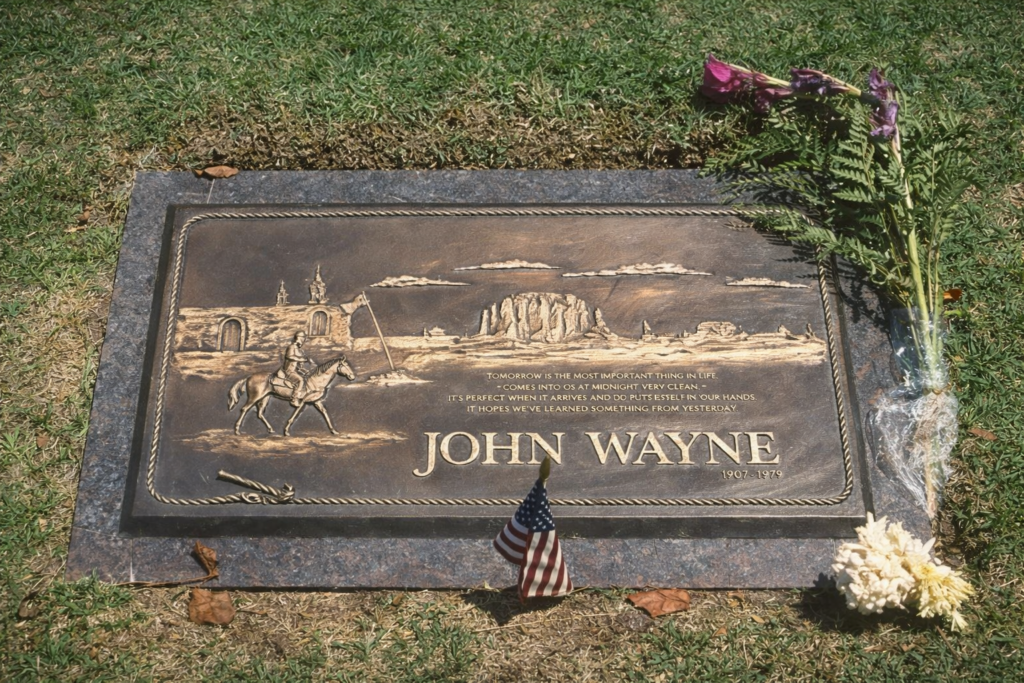
This epitaph perfectly captures the essence of John Wayne’s final spiritual and emotional state. It is a timeless testament to the belief in personal redemption, the constant opportunity for self-improvement, and the quiet, profound wisdom of a man who, despite his monumental flaws, his fierce controversies, and his towering public image, always looked forward to the next horizon with unyielding hope.35
Why His Story Still Touches Hearts Today
Decades after his passing, the story of John Wayne’s final days continues to resonate deeply and emotionally with audiences around the world. The enduring fascination with his death is not rooted in a morbid or voyeuristic curiosity, but rather in the profound, universal human truths that his final chapter vividly reveals.
At its absolute core, the story touches hearts because it bridges the seemingly impassable gap between the mythic and the mortal. For half a century, the public witnessed a titan of American culture, a man who projected total invulnerability, who never backed down from a fight, and who always emerged victorious, confront the ultimate, terrifying vulnerability of terminal illness. Instead of hiding in shame or retreating into bitterness, he faced his severe physical decline, his massive weight loss, and his excruciating pain with a quiet, dignified grit that validated the very heroes he played on screen.19 The thunderous standing ovation at the 1979 Oscars was not just routine Hollywood applause; it was a collective, emotional expression of awe for a man facing certain death without flinching.20
Furthermore, the highly private details of his passing, the deathbed baptism into the Catholic Church, the heartfelt, tearful apologies to his son Patrick, the fiercely protective estate planning, and the tender, unguarded final words to his wife and daughter, shatter the monolithic, often rigid caricature of the stoic, emotionally unavailable mid-century patriarch.3 They reveal a man desperate for family reconciliation, eager for spiritual peace, and overflowing with love. The image of the dying legend using his last, agonizing breaths to tell his son “I’m proud of you” strikes a massive, universal chord, speaking directly to the innate human desire for parental approval and highlighting the profound tragedy of words left unspoken until the eleventh hour.3
John Wayne’s story endures precisely because it is a master narrative of redemption and humanity. It serves as a powerful reminder that no matter how vast our earthly accomplishments, how high our wealth climbs, or how impenetrable our public armor appears, we all eventually return to the fundamental, inescapable realities of love, faith, and family. The legacy he leaves behind is uniquely dual in nature: there is the immortal celluloid hero who continues to ride across the screens of history, shooting straight and standing tall, and there is the mortal man whose courageous, deeply vulnerable end teaches us what it truly means to face the sunset with dignity.
Closing
The final hours of John Wayne effectively strip away the grand cinematic illusion to reveal a breathtaking portrait of incredible personal courage, deep paternal love, and a profound, successful search for spiritual peace. He lived a life of unprecedented, global scale, riding across the most expansive landscapes of the American imagination. Yet, in his final, defining moments, his vast world narrowed down to the sterile walls of a hospital room, the comforting hands of his beloved family, and the quiet solace of a newfound faith.
His legacy is not merely preserved in the aging reels of classic Westerns, the archives of Hollywood history, or the bronze plaque overlooking the Pacific; it actively and vibrantly lives on through the life-saving, relentless work of the John Wayne Cancer Foundation, and through the timeless lessons of grit, honesty, and grace he imparted to his children. The Duke may have ridden off into the sunset on June 11, 1979, but the man, Marion Morrison, left an indelible, eternal mark on the human spirit. If John Wayne’s remarkable journey of physical resilience, family reconciliation, and enduring philanthropy moved you, please share this story to ensure the man behind the legend is never forgotten, and consider exploring the vital, ongoing work of the John Wayne Cancer Foundation as they continue his final, most important fight.